 $25 OFF AC REPAIR | $139 MAINTENANCE

 Cooling
 Heating
 Water Heater
 Other Services
What Is Included In A Professional AC Tune-Up

May
A proper AC tune up checklist is 10 to 12 tasks, takes a technician 45 to 75 minutes, and tells you three things: whether anything is failing, whether the system is charged correctly, and whether you’ll make it through a Calgary summer without a service call. A checkbox-only “tune-up” is 15 minutes of opening a few panels and charging you for the drive. This guide breaks down what’s on a real tune-up, what gets quietly skipped on the cheap ones, and how to tell the difference when you’re booking a Calgary AC service visit.
The short answer: if the technician doesn’t connect manifold gauges to the service valves and measure either superheat or subcooling, you didn’t get a tune-up. You got a visual inspection. That distinction is the single biggest difference between a $79 tune-up and one that’s priced fairly for the work.
In This Article
- What “Tune-Up” Actually Means
- Outdoor Condenser: Cleaning and Electrical
- The Refrigerant Test: The One That Separates Real From Fake
- Indoor: Evaporator Coil, Drain, Filter, and Blower
- The Measurements That Confirm the System Works
- The 12-Point Checklist at a Glance
- How to Tell a Real Tune-Up From a $79 One
- When to Book One
- Frequently Asked Questions
What “Tune-Up” Actually Means
A professional AC tune-up is a comprehensive service that includes cleaning outdoor condenser coils, testing electrical components, measuring refrigerant levels (superheat/subcooling), and inspecting indoor blowers to ensure optimal efficiency and prevent summer breakdowns.
A professional AC tune-up combines three things: cleaning tasks that restore performance the system has lost since last year, measurement tasks that verify the system is operating inside manufacturer spec, and inspection tasks that catch components trending toward failure before they fail on you. Skip any of the three and the visit is incomplete.
On a typical Calgary residential central AC, the full checklist runs about 12 points. The technician should be able to hand you a one-page written report at the end showing what was checked, what was adjusted, and what needs attention. No report means no accountability.
Outdoor Condenser: Cleaning and Electrical
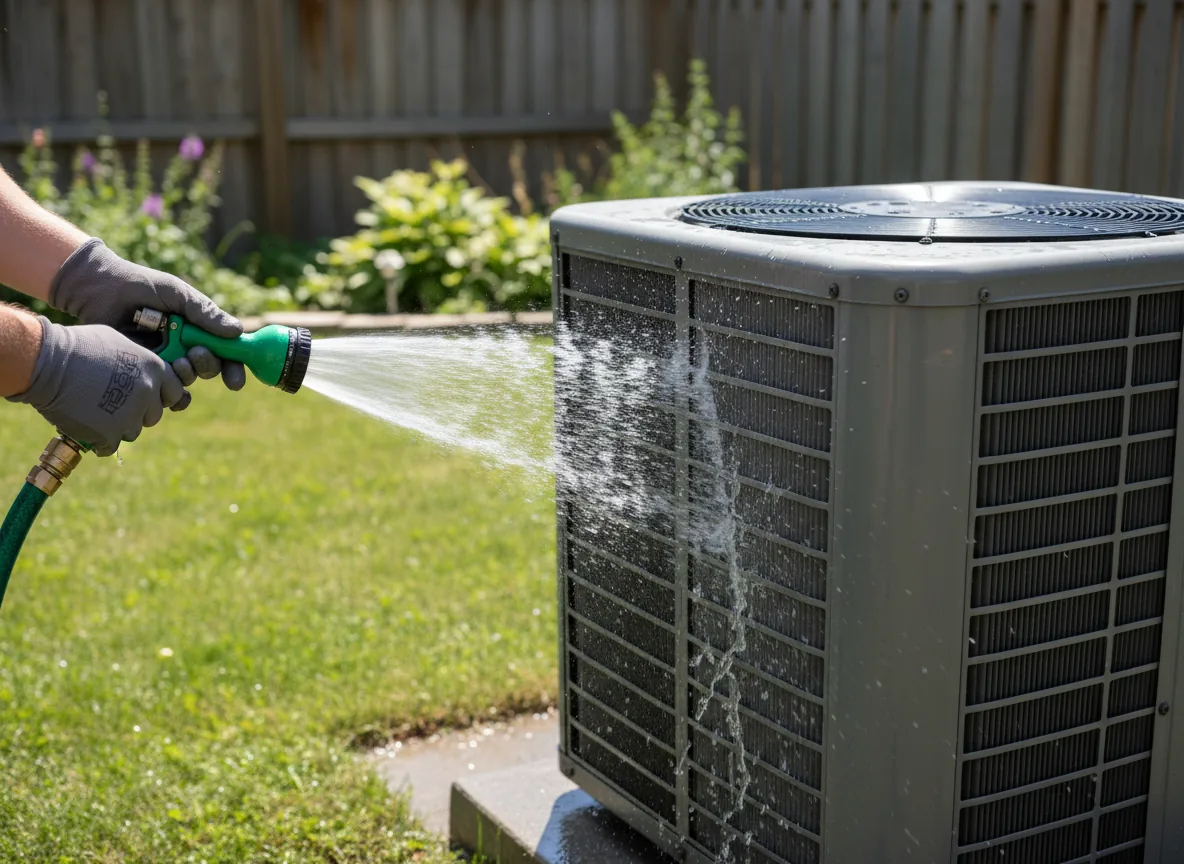
Everything on the outdoor side gets worked on first, because it’s where the bulk of performance is lost between seasons. Cottonwood fluff, dust, wildfire ash, and grass clippings caked on the aluminum fins block heat rejection, which means the compressor runs longer and hotter for the same cooling output. The fix is a straight-down rinse with a garden hose (never a pressure washer – it bends fins), with the power disconnected at the outdoor disconnect switch first.
Inside the electrical compartment, the technician should test the run capacitor with a multimeter (capacitance should measure within 6 percent of the rated microfarads printed on the side), check the contactor for pitting on the contacts, and tighten every electrical connection with a torque screwdriver. A loose connection on a contactor lug is a common cause of compressor-won’t-start calls in July.
The Refrigerant Test: The One That Separates Real From Fake
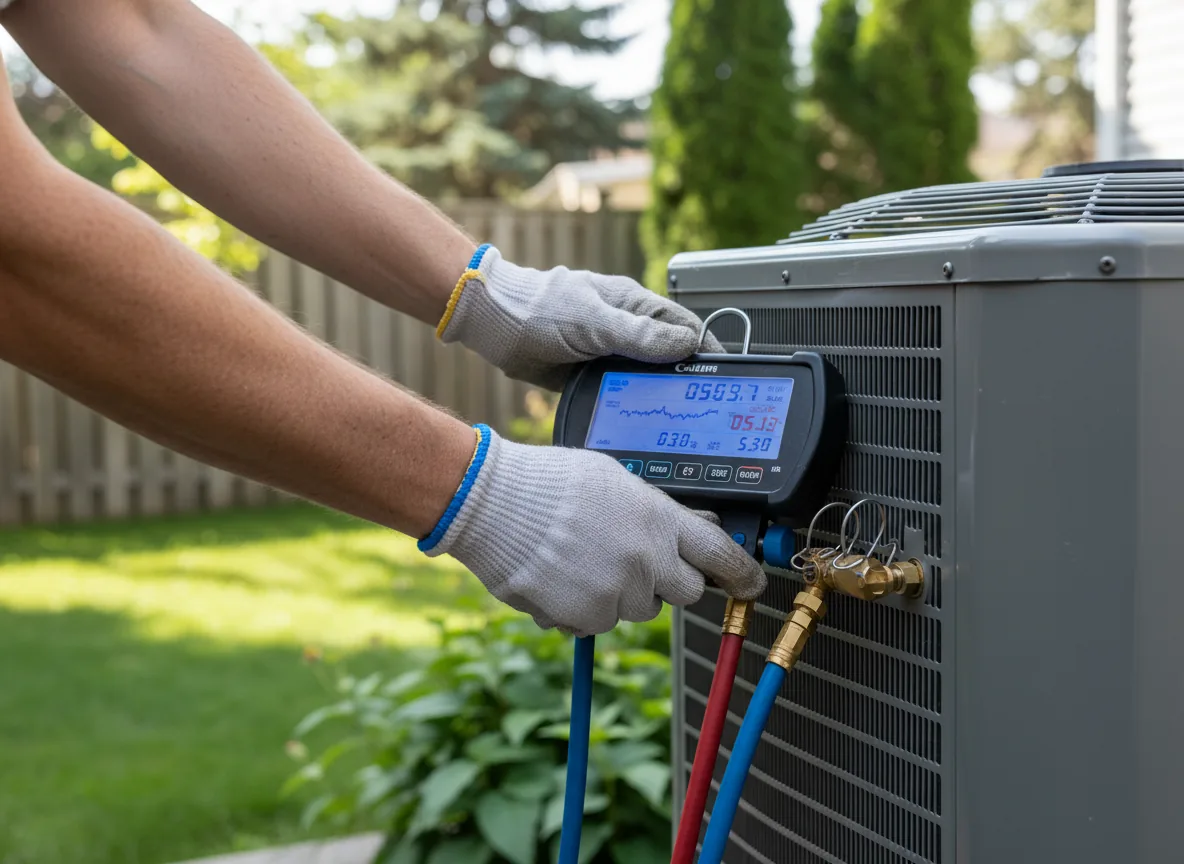
This is the line between a real tune-up and a visual inspection. The technician hooks up a manifold gauge set to the two service valves on the outdoor unit, measures the suction and discharge pressures, takes a thermometer reading at the suction line, and calculates either superheat (for fixed-orifice systems) or subcooling (for TXV systems). Both methods tell you if the refrigerant charge is correct to within a few percent.
If it’s off, the tech either recovers the excess or adds a measured amount – not by feel, by calculation. A system that’s even 10 percent undercharged loses 20 percent of its capacity, runs longer, and ices the evaporator coil. Overcharging is equally bad and damages the compressor over time.
If the tech never touches the service valves, you have been sold a visual inspection, not a tune-up. The Natural Resources Canada ENERGY STAR program for high-efficiency central AC publishes the performance specs these measurements verify against.
Indoor: Evaporator Coil, Drain, Filter, and Blower
Inside, the tech opens the evaporator cabinet (usually above the furnace) and inspects the evaporator coil for biological growth and dust accumulation. A buildup of either insulates the coil and reduces cooling. Light buildup gets a coil-specific cleaner; heavy buildup needs a pull-and-clean job which is a separate service.
The condensate drain line is flushed with a pressure bulb or shop vac, because a blocked drain is the #1 cause of water damage from an AC system in July and August. A few dollars of vinegar or a shot of algaecide extends the life of the drain line by a full season.
The blower motor amperage is measured and compared to the nameplate rating; a motor drawing above nameplate is on its way out. The air filter is replaced if the homeowner hasn’t done it recently, and the airflow direction arrow is verified pointing toward the furnace.
The Measurements That Confirm the System Works
At the end of the visit, the tech should measure the temperature split across the evaporator coil – supply-air temperature subtracted from return-air temperature – and record it. On a correctly operating Calgary residential AC, that split should be 8 to 12 degrees Celsius. A split under 6 degrees means the refrigerant charge or airflow is wrong; a split over 14 degrees means airflow is too restricted.
They should also verify the thermostat calibration by comparing its display to a known-good thermometer held next to it for five minutes, and check any programmed schedules for obviously-wrong setpoints.
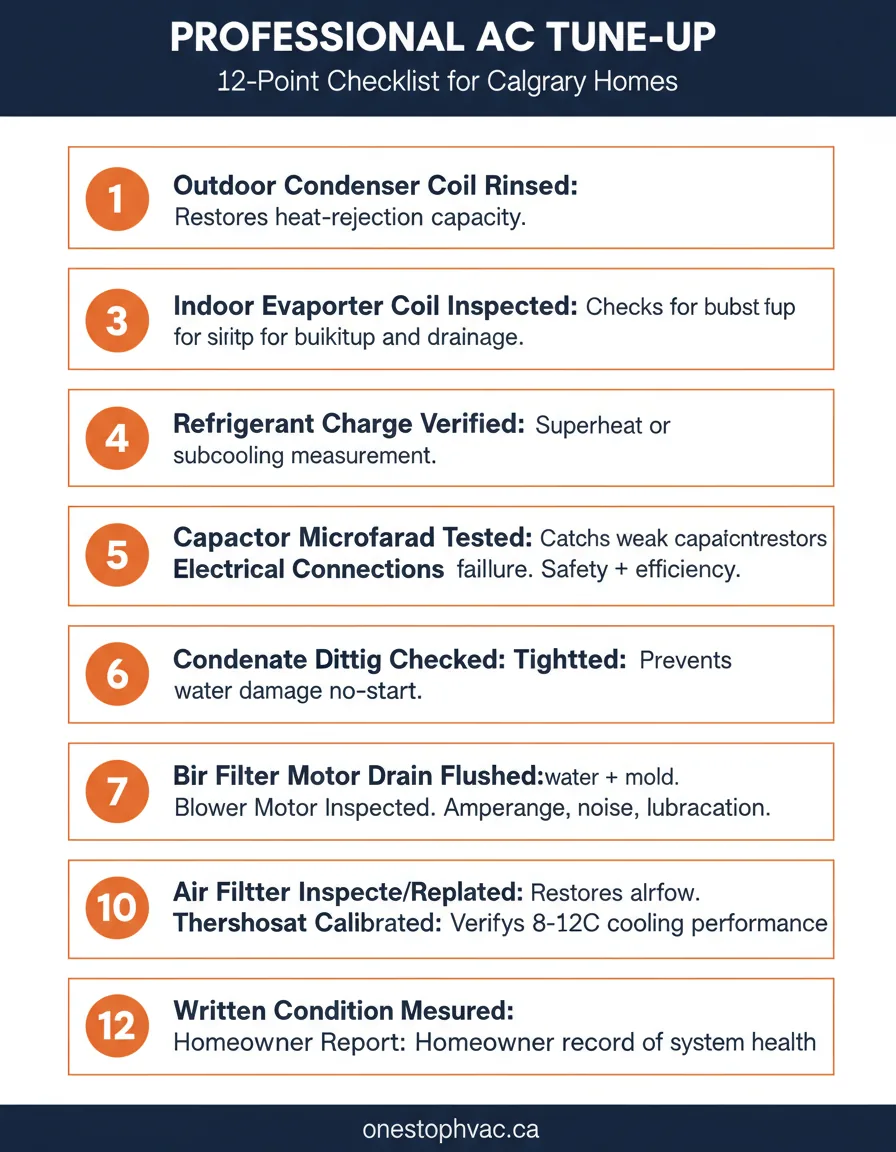
The 12-Point Calgary AC Tune-Up Checklist
- Rinse condenser coil: Clean outdoor fins to restore heat rejection.
- Test run capacitor: Verify microfarad levels are within 6% of rating.
- Inspect contactor: Check for electrical pitting and wear.
- Tighten electrical connections: Prevent loose-wire starting failures.
- Measure refrigerant pressures: Check suction and discharge levels.
- Calculate superheat/subcooling: Verify exact refrigerant charge.
- Inspect evaporator coil: Check for biological growth or dust blocking airflow.
- Flush condensate drain: Prevent summer water backups.
- Measure blower motor amperage: Ensure the indoor motor isn’t overdrawing power.
- Check/replace air filter: Verify correct airflow direction and cleanliness.
- Measure temperature split: Confirm an 8-to-12 degree Celsius drop across the coil.
- Calibrate thermostat: Verify accurate temperature sensing and schedule settings.
How to Tell a Real Tune-Up From a $79 One
Cheap seasonal tune-ups work as loss-leaders. The technician does a visual inspection, replaces the filter, maybe rinses the outdoor coil, and hands you a clipboard to sign. The refrigerant test doesn’t happen. The contactor isn’t opened. Capacitor microfarads aren’t measured. If anything failing is caught, it’s caught by accident.
A few questions to ask when booking:
- Will the technician be connecting gauges to the refrigerant lines? (Answer should be yes.)
- Will I get a written condition report at the end? (Answer should be yes.)
- How long is the visit scheduled for? (45 minutes is the minimum floor for a thorough tune-up.)
- What happens if something is found failing – is the diagnostic portion included or added on? (You want the diagnosis included; repairs quoted separately.)
Pros in Okotoks HVAC service and Airdrie HVAC tune-up bookings tend to publish the checklist in advance; if you can’t find the checklist in writing, the visit is probably a $79 visual.
When to Book One
April or early May is the ideal window for a Calgary AC tune-up. Service technicians have open windows before the first heatwave, pricing is standard (no peak-season premium), and any parts that need ordering have time to arrive before you actually need cooling. By mid-June, the schedule is full and emergency repairs take priority over preventive visits.
If the system is new (under 3 years), annual tune-ups are often required to maintain the manufacturer warranty. Check the paperwork; skipping a documented tune-up is one of the ways manufacturers deny compressor claims down the road.
Take This Guide With You
Print or save the full PDF – the same checklist we use on service calls.
Frequently Asked Questions
How Long Should an AC Tune-Up Take in Calgary?
A thorough residential AC tune-up on a typical Calgary home takes 45 to 75 minutes. Anything under 30 minutes is not a tune-up – it is a filter change and a visual inspection. If the technician is out in 15 minutes, ask what was actually done.
How Often Should I Have My AC Tuned Up?
Once a year, ideally in April or early May before the first heatwave. Systems under warranty often require documented annual maintenance; skipping it can void a compressor claim years later. Older systems benefit from a second inspection in fall to prep for winter storage.
What Is the Difference Between an AC Tune-Up and an AC Repair?
A tune-up is preventive: cleaning, measuring, inspecting, and small adjustments. A repair is corrective: replacing a specific failed component. A good tune-up often catches components trending toward failure and the technician quotes a repair on the spot, which is cheaper than an emergency visit in July.
Is a Cheap $79 AC Tune-Up Worth It?
Sometimes, if the price genuinely reflects the work and the provider is honest about scope. Often it is a loss-leader visual inspection with the real tune-up upsold at the door. Ask whether refrigerant pressures will be measured and whether you will receive a written condition report. If either answer is no, you are buying a filter change.
Can I Do Some of the Tune-Up Tasks Myself?
Yes. You can safely rinse the outdoor coil with a garden hose (disconnect the power first), replace the filter, and keep vegetation clear from the condenser. Anything involving refrigerant, electrical components, or removing panels should be left to a licensed technician; electrical capacitors hold a lethal charge even with power disconnected.
Keep Reading
One Stop HVAC runs the full 12-point professional tune-up on residential central AC systems across Calgary, Airdrie, Cochrane, Okotoks, Chestermere, and Canmore, and we publish the written checklist so you know exactly what’s included before the technician arrives. Book your spring AC tune-up before the schedule fills up in June.