 $25 OFF AC REPAIR | $139 MAINTENANCE

 Cooling
 Heating
 Water Heater
 Other Services
Signs Your Hot Water Heater Is Failing
May
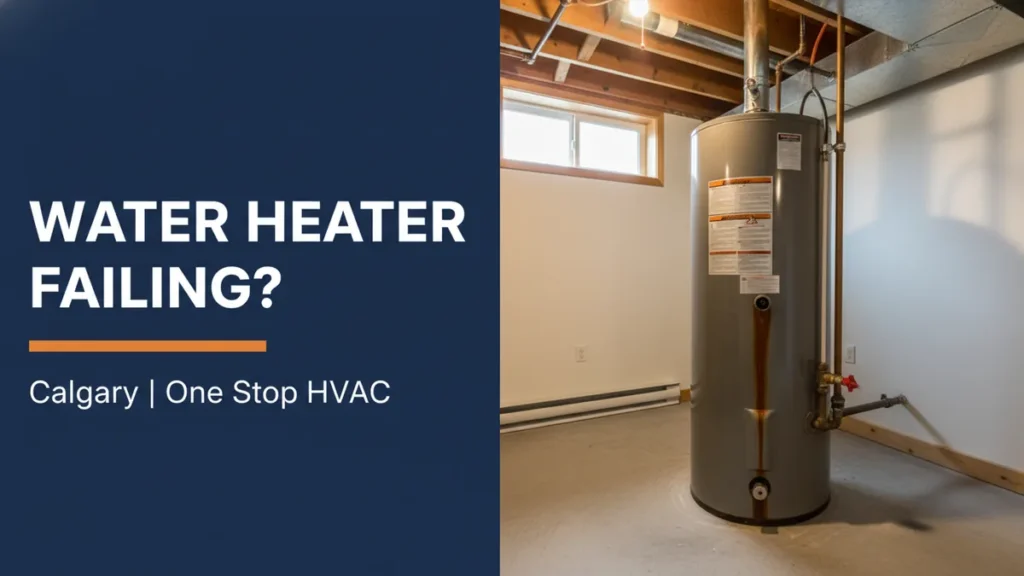
The clearest signs hot water heater is failing – rusty water, banging noises, cold showers two minutes in, or a puddle on the basement floor – usually mean the tank has 6 to 18 months left. This guide walks through the seven most common failure signals, in the order they typically show up, and what each one costs to ignore. If you’ve already got water on the floor, skip ahead to same-day water heater service. The tank will not fix itself, and standing water near gas appliances is its own kind of problem.
Most Calgary homes run a tank-style gas water heater between 40 and 60 US gallons. Under normal conditions, glass-lined tanks last 8 to 12 years. Hard water shortens that by a year or two. Missed anode-rod inspections shorten it more. By year ten, most tanks are running on a compromised sacrificial anode, a layer of sediment at the bottom, and whatever margin the original factory weld had. The signs below are the tank telling you it’s closer to the end than the middle.
The most common signs a hot water heater is failing include rust-tinted water, loud popping or banging noises during heating, water pooling around the base of the tank, running out of hot water unusually fast, steadily rising utility bills, foul odors, and the tank simply reaching 10 or more years of age.
In This Article
- The 7 Warning Signs at a Glance
- Rust-Tinted or Metallic-Tasting Hot Water
- Popping, Banging, or Rumbling During Heating
- Water Pooling at the Base of the Tank
- Hot Water Runs Out Too Fast
- Age: Ten Summers and Counting
- A Rising Gas or Electric Bill
- Rotten-Egg Smell or Cloudy Hot Water
- Frequently Asked Questions
The 7 Warning Signs at a Glance
- Rust-tinted water: Indicates internal tank corrosion or a spent anode rod.
- Popping or banging noises: Caused by boiling water trapped under hardened mineral sediment.
- Water pooling: A clear sign the internal glass-lined steel tank has cracked or rusted through.
- Running out of hot water quickly: Sediment taking up space or a broken internal dip tube.
- Over 10 years old: The tank has exceeded its average structural life expectancy.
- Rising energy bills: Sediment insulating the burner, forcing it to run longer to heat water.
- Rotten-egg smell or cloudy water: Bacterial reaction with the anode rod or dissolved air/metals.
Rust-Tinted or Metallic-Tasting Hot Water
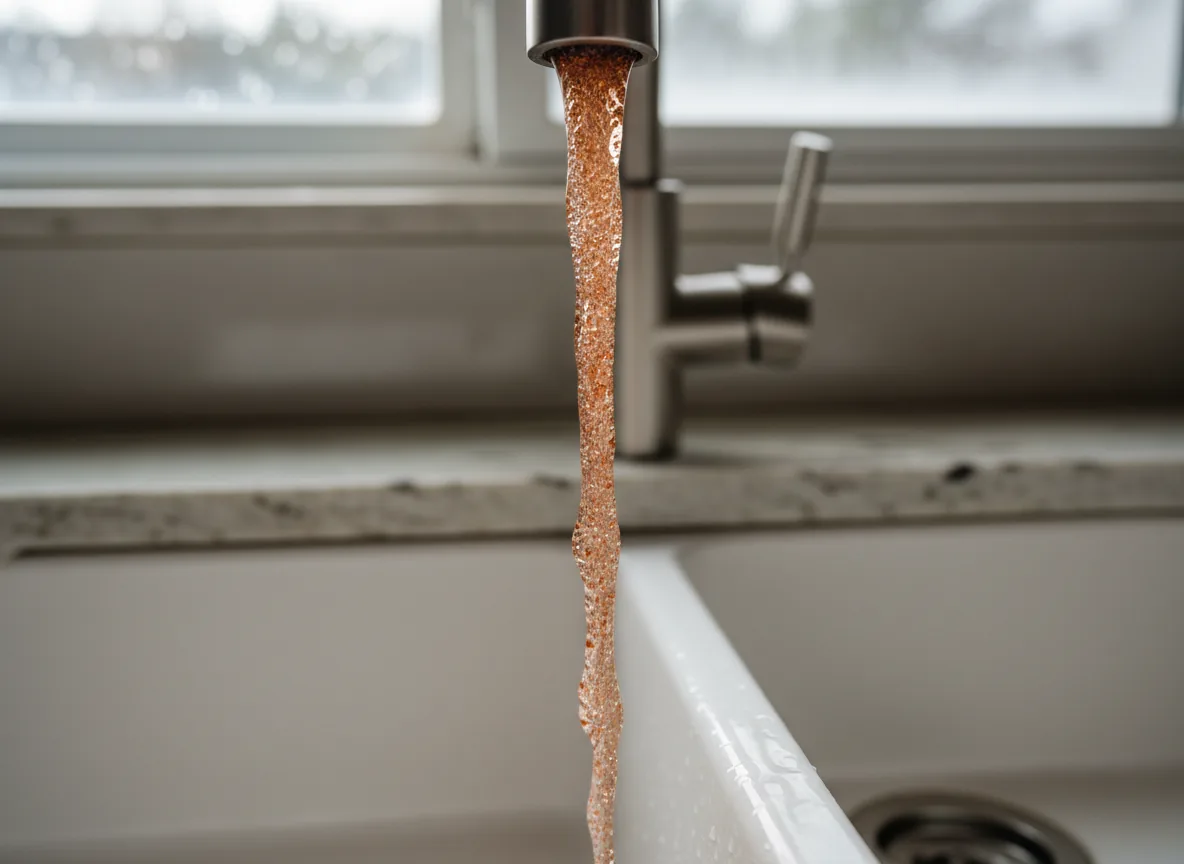
Run the cold tap for a full minute, then run the hot tap for a full minute and compare. If only the hot water is rusty or tastes metallic, the problem is inside the tank – almost always the anode rod is spent and the tank interior has started corroding. A proactive anode-rod replacement on a 6 to 8 year old tank can buy you another 4 to 6 years. Past year 10, rust-tinted hot water is usually a pre-failure signal: replace before the tank lets go on a weekend.
Popping, Banging, or Rumbling During Heating
That sound is boiling water moving around under a layer of hardened mineral sediment at the bottom of the tank. Calgary’s water is moderately hard (around 170 to 200 ppm), and over the years sediment builds into a calcium blanket that insulates the burner from the water. The burner stays on longer than it should, the tank bottom overheats, and you hear the tank essentially kettling.
Sometimes you can extend tank life by flushing the sediment through the drain valve. On a tank under 8 years old, that’s worth trying. On a tank over 10 years old, flushing an already-weakened tank can dislodge enough debris to start a slow leak within weeks – at that point, plan the replacement instead.
Water Pooling at the Base of the Tank
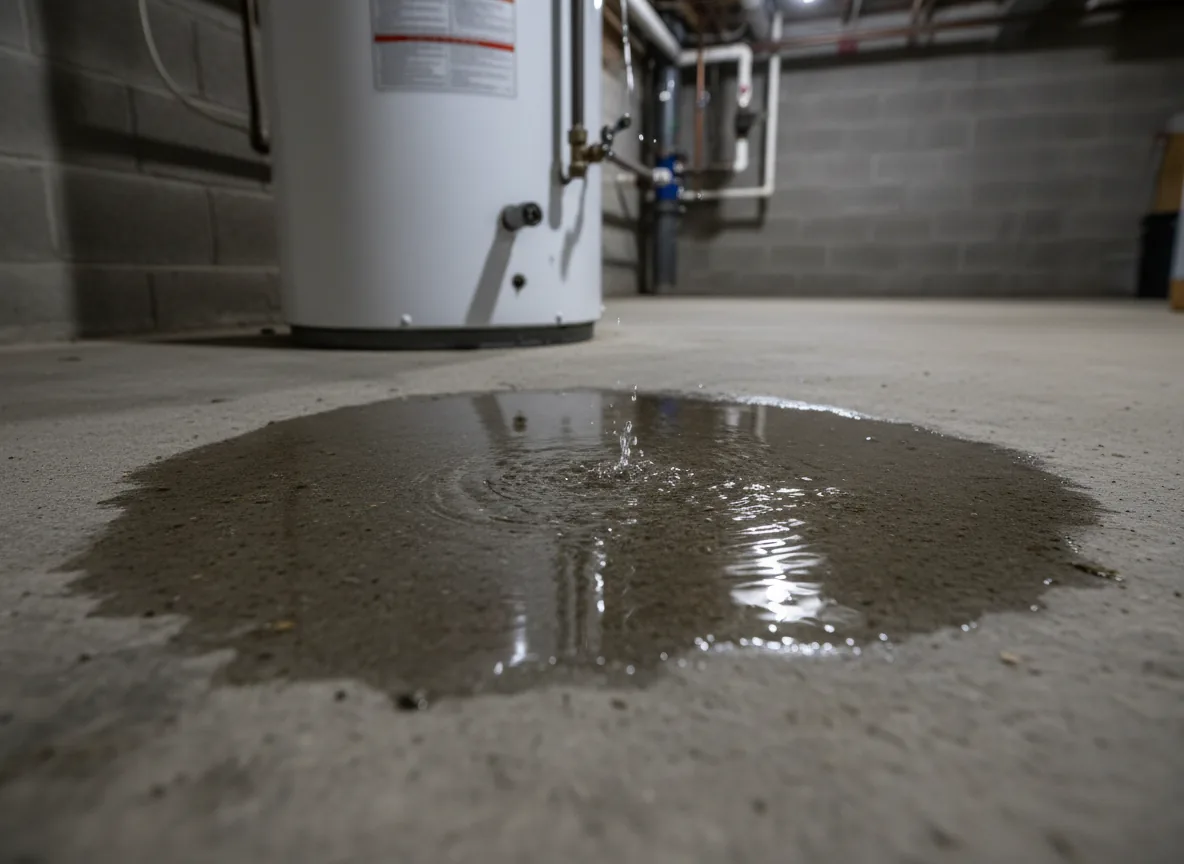
Any standing water at the base of a tank-style water heater means the tank itself has failed. Not a fitting, not the T&P valve on the side, not the drain valve. The tank. Glass-lined steel tanks eventually rust through from the inside; once they do, the leak only gets worse.
Shut off the cold-water inlet immediately (the shutoff lever is usually directly above the tank), turn the gas valve to OFF (or the breaker for an electric unit), and call for a replacement. Attempting to “repair” a leaking tank is not something a licensed technician will do – the whole unit has to go.
Hot Water Runs Out Too Fast
A 50-gallon tank should give a single shower plus a load of dishes before recovery slows. If you’re running out of hot water halfway through a normal shower, something has stolen usable capacity. The usual suspects, in order: sediment taking up physical volume in the bottom of the tank, a failing dip tube (the cold-water inlet tube inside the tank that directs incoming cold water to the bottom so the hot stays stratified at the top), or a burner/element that can’t heat fast enough to keep up.
If the tank is under 8 years old and the problem appeared gradually, a flush plus a dip-tube replacement may fix it. Under 4 years old and it’s almost certainly under warranty.
Age: Ten Summers and Counting
Pull the rating plate off the side of your tank and find the serial number. Most manufacturers encode the install year in the first two digits. If the tank is 10+ years old and you’re seeing any of the signs above, the question stops being “should I replace it” and becomes “can I schedule the replacement before it fails.” A planned replacement is a straightforward 2-3 hour visit; an emergency replacement after the tank floods a basement is a very different day.
Homeowners in Cochrane and Chestermere HVAC service areas tend to plan their water-tank replacements in late winter, when the service windows are open and the price pressure from flood-emergency calls is lowest.
A Rising Gas or Electric Bill
Sediment insulates the burner from the water. To hit the same setpoint, the burner runs longer, and your gas bill ticks up 5 to 15 percent over what the same tank used to cost to run three years ago. It’s a subtle signal compared to a flood, but it’s real, and it’s the reason a failing tank is also inefficient long before it actually fails.
If you’re already thinking about the next tank, this is also where a modern gas or tankless water heater starts to make economic sense. Condensing tanks and tankless units both run 15 to 30 percent more efficient than a mid-2010s standard tank.
Rotten-Egg Smell or Cloudy Hot Water
Sulfur smell in hot water (but not cold) is a bacterial reaction with a magnesium anode rod in low-oxygen well water. It’s more common on rural service lines than on Calgary municipal supply, but it does show up. The fix is switching to an aluminum-zinc anode and flushing the tank; a technician can do both in one visit.
Cloudy hot water (milky, not rusty) is usually dissolved air and will clear in a minute. Cloudy that doesn’t clear, or comes with a metallic taste, points back to the rust conversation above.
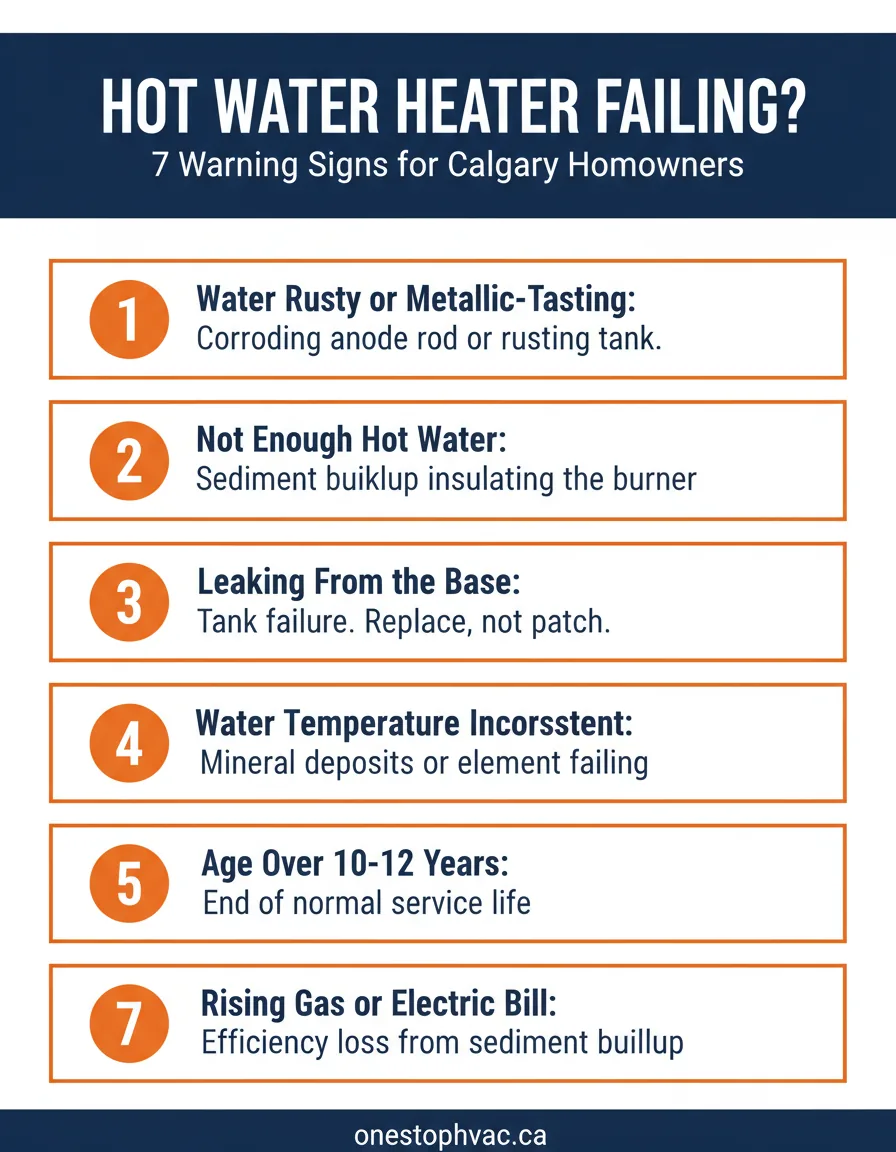
Take This Guide With You
Print or save the full PDF – the same checklist we use on service calls.
Frequently Asked Questions
How Long Should a Hot Water Heater Last in Calgary?
Glass-lined tank water heaters typically run 8 to 12 years in Calgary, and condensing or tankless units 15 to 20 years with annual maintenance. Hard water shortens the tank lifespan by 1 to 2 years unless the anode rod is inspected every 3 years.
Can a Leaking Hot Water Heater Be Repaired?
It depends on where it’s leaking from. A leak at the cold inlet fitting, the T&P relief valve on the side, or the drain valve at the bottom can often be repaired. A leak from the tank body itself cannot; at that point replacement is the only option, and a licensed technician will recommend shutting the water and gas off until the new unit is installed.
Is Rusty Hot Water Dangerous to Drink?
Short-term, it is not directly harmful – iron oxide is not toxic at the levels that cause visible discoloration. Long-term, it is a sign the tank is corroding from the inside and usually means the anode rod needs replacement or the tank is at end of life. Use filtered cold water for drinking and cooking until the issue is resolved.
What Is the Cost to Replace a Hot Water Heater in Calgary?
Standard 40 to 50 gallon gas tank replacements start at approx. a mid-range figure once labour, permits, and haul-away are included. Tankless gas units and condensing tanks cost more up front but pay back over the life of the unit through lower operating cost. Always get a written quote before approving the work.
Do I Need a Permit to Replace a Water Heater in Calgary?
Yes. Gas water heater installations in Alberta require a gas permit issued through the municipality, and the work must be performed by a ticketed gas fitter. Do not allow anyone without a gas ticket to install a natural gas appliance in your home.
Keep Reading
One Stop HVAC handles water-heater diagnostics, anode-rod replacements, and same-day tank and tankless installations across the Calgary Metropolitan Region, including Airdrie, Cochrane, Okotoks, Chestermere, and Canmore. If you’re seeing any of the signs above and the tank is past eight years old, book a diagnostic visit before the failure picks its own date.