 $25 OFF AC REPAIR | $139 MAINTENANCE
 Cooling
 Heating
 Water Heater
 Other Services
What Calgary Homeowners Need to Know About Tankless Water Heaters
Apr
A tankless water heater in Calgary can cut your hot water energy costs by 24% to 34% compared to a conventional tank, according to Natural Resources Canada. If you are weighing the switch, the short answer is: tankless works well for most Calgary households, but your home’s gas line capacity, water hardness, and daily hot water demand all factor into whether it is the right call. Our water heater installation team walks homeowners through these details every week.
This guide breaks down the real costs, performance trade-offs, and maintenance realities of tankless water heaters in Calgary’s climate. No sales pitch. Just the numbers and the nuances so you can make a confident decision.
What we will cover
- How tankless water heaters work (and why it matters in Calgary)
- Tankless vs traditional tank: side-by-side comparison
- Calgary-specific challenges: hard water and cold inlet temps
- What tankless water heaters cost in Calgary
- When tankless makes sense (and when it does not)
- Maintenance your tankless heater actually needs
- Frequently asked questions
How tankless water heaters work (and why it matters in Calgary)
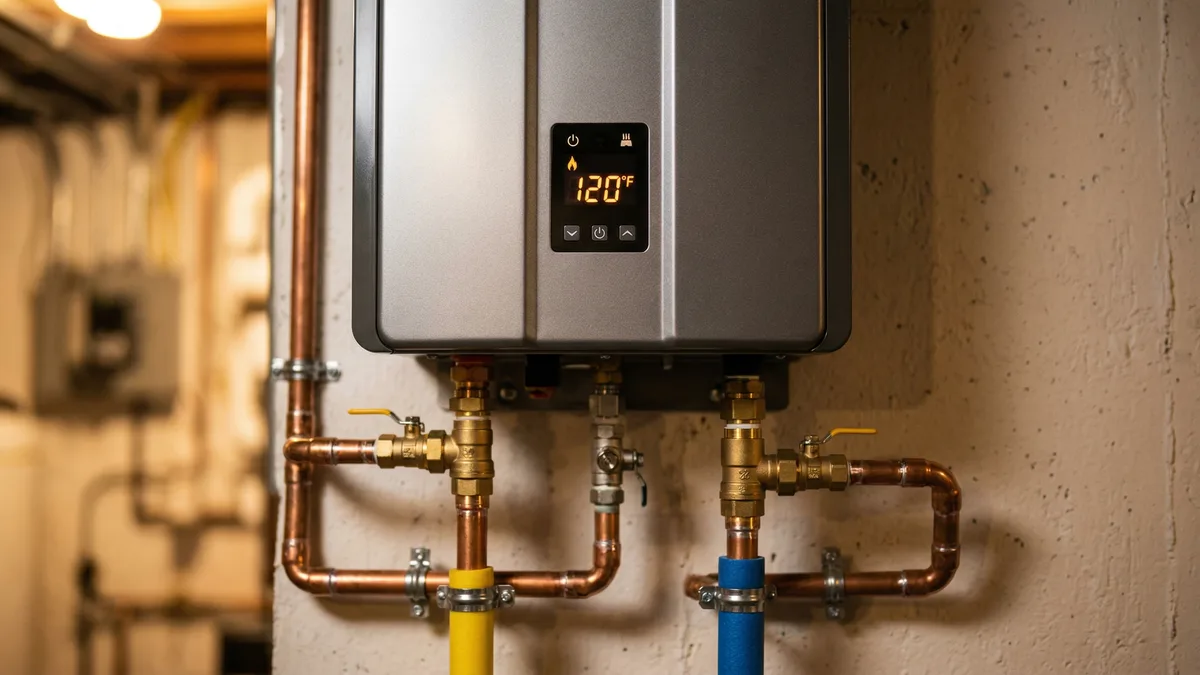
A tankless water heater fires a gas burner or electric element only when you open a hot water tap. Cold water flows through a heat exchanger, gets heated to the set temperature, and comes out hot on the other end. No storage tank. No standby heat loss sitting in your basement 24 hours a day.
In Calgary, this matters more than in milder climates. Your incoming water temperature in January can drop to 1 to 3 degrees Celsius. That means the unit needs to raise the water temperature by roughly 55 to 60 degrees to deliver a comfortable shower. The unit’s BTU rating determines whether it can handle that temperature rise at the flow rate you need. Undersized units struggle in our winters, which is why proper sizing during gas line installation and setup is critical.
Tankless vs traditional tank: side-by-side comparison
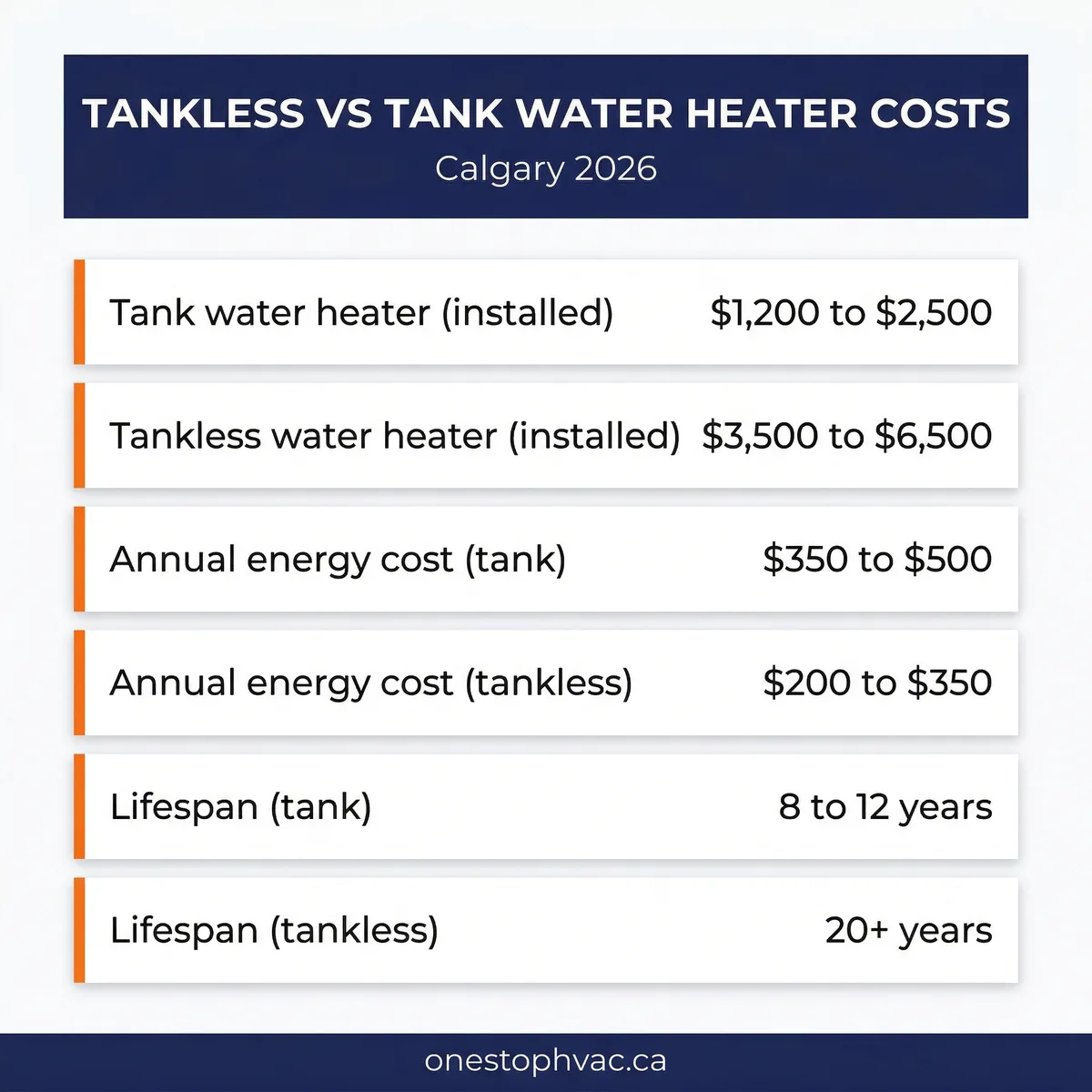
| Feature | Tankless | Traditional tank (40 to 50 gal) |
|---|---|---|
| Upfront cost (installed) | $3,500 to $6,500 | $1,200 to $2,500 |
| Annual energy cost | $180 to $280 | $300 to $450 |
| Lifespan | 20+ years | 8 to 12 years |
| Energy efficiency | 0.87 to 0.99 EF | 0.58 to 0.67 EF |
| Hot water supply | Continuous (at rated flow) | Limited by tank size |
| Space required | Wall-mounted, compact | Floor space for tank |
| Maintenance | Annual flush + descale | Annual anode rod check |
| Calgary hard water impact | High (scale buildup in heat exchanger) | Moderate (sediment in tank) |
Calgary-specific challenges: hard water and cold inlet temps
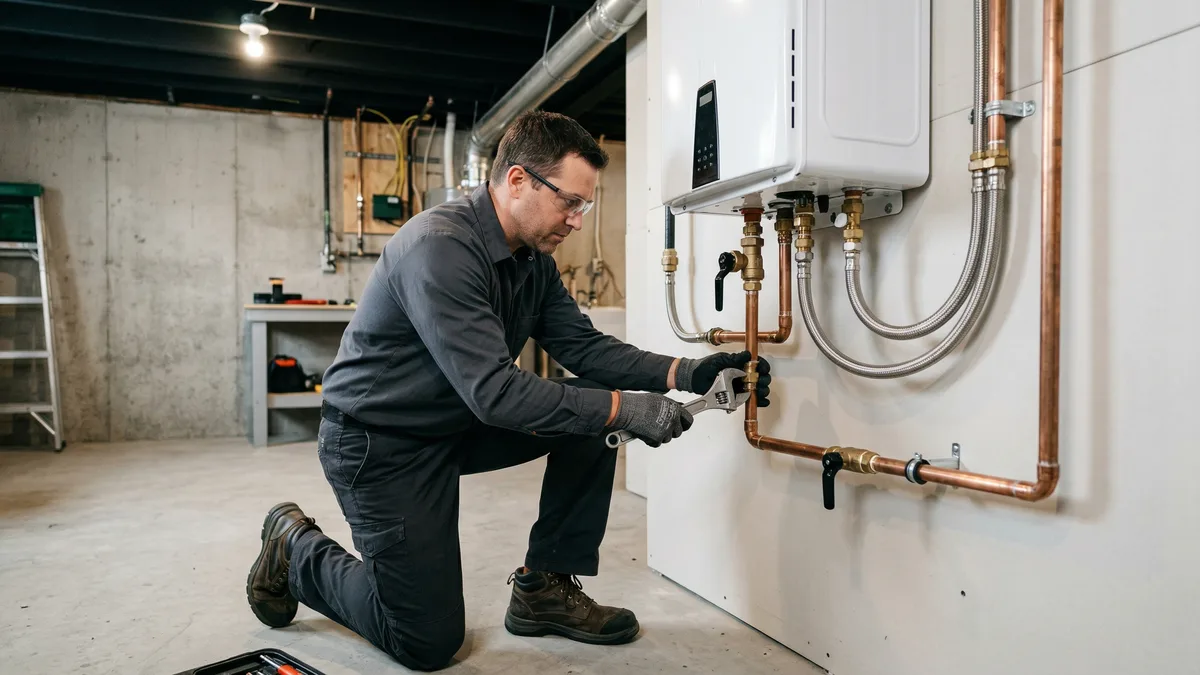
Two factors make tankless ownership in Calgary different from what you will read in most online guides written for American markets.
Hard water and scale buildup
Calgary’s water hardness ranges from 165 to 210 ppm (moderately hard to hard). Inside a tankless unit, the heat exchanger has narrow passages that scale up faster than a traditional tank’s open interior. Without annual descaling, efficiency drops and the unit can throw error codes within two to three years. A water softener or scale inhibitor filter upstream of the unit extends its life significantly.
Cold inlet water temperatures
Calgary’s municipal water enters your home at roughly 1 to 4 degrees Celsius in winter. Most tankless manufacturer specs assume inlet temps of 10 to 15 degrees. That gap means your unit needs to work harder, reducing the flow rate it can deliver at the set temperature. A unit rated for 7.5 GPM in Phoenix might only deliver 4 to 5 GPM in a Calgary January. Size up or plan for lower simultaneous fixture use during peak cold.
Did you know?
Calgary’s winter inlet water temperature is among the coldest in any major Canadian city. At 1 to 3 degrees Celsius, your tankless unit has to produce a temperature rise of nearly 60 degrees, roughly double what units deal with in Vancouver or Toronto during the same season. This is why proper BTU sizing matters more here than almost anywhere else in the country.
What tankless water heaters cost in Calgary
Expect to pay $3,500 to $6,500 fully installed for a natural gas tankless water heater in Calgary. That range depends on the brand, your existing gas line capacity, venting requirements, and whether your home needs electrical upgrades for the control board.
Here is the typical cost breakdown:
- Unit itself: $1,200 to $2,800 (Navien, Rinnai, Noritz, or John Wood are common in Alberta)
- Installation labour: $800 to $1,500
- Gas line upgrade (if needed): $400 to $1,200. Many older Calgary homes have 1/2-inch gas lines that need upsizing to 3/4-inch to feed a tankless unit’s higher BTU demand
- Venting: $200 to $600 for stainless steel concentric venting (required for condensing models)
- Permits: $100 to $200 for gas fitting permits in Calgary
The payback period typically lands between 8 and 12 years, depending on your household’s hot water usage. Larger families (four or more people) see faster payback because they avoid more standby heat loss. The NRCan water heater energy guide has useful calculators if you want to run the numbers for your situation.
People often ask: “Are there rebates for tankless water heaters in Alberta?”
As of 2026, the federal Canada Greener Homes Grant program has ended, but some Alberta utility companies still offer point-of-sale rebates on high-efficiency gas appliances. Check with your local gas provider (ATCO or Direct Energy) for current offers. Municipal programs change frequently, so it is worth asking your installer about available incentives at the time of purchase.
Tankless vs Tank Payback Calculator
Estimate your annual savings and how quickly a tankless unit pays for itself.
When tankless makes sense (and when it does not)
Tankless is a strong fit if:
- Your current tank is 10+ years old and due for replacement anyway
- You have 3 or more people in the household and frequently run out of hot water
- You are renovating and can upgrade the gas line at the same time
- You value the space savings (wall-mounted units free up floor space in utility rooms)
- You plan to stay in the home 8+ years to capture the energy savings
A traditional tank may be the better choice if:
- Your gas line is undersized and the upgrade cost pushes the project over budget
- You are in a smaller household (one or two people) with low hot water demand
- You plan to sell within the next few years
- Your home already has a relatively new, high-efficiency tank water heater
If you are not sure which direction makes sense, our team can assess your home’s gas line, usage patterns, and existing setup during a water heater service call.
Maintenance your tankless heater actually needs
Tankless units need less maintenance than most people expect, but they are not maintenance-free. Here is what matters in Calgary specifically:
- Annual vinegar flush: Run white vinegar through the heat exchanger for 45 to 60 minutes to dissolve calcium scale. This is the single most important maintenance task in a hard water city
- Inlet filter cleaning: Check and clean the cold water inlet filter every 6 months. Calgary’s water carries fine sediment that can restrict flow
- Venting inspection: Confirm the exhaust vent is clear and the condensate drain is not frozen (a real risk in Calgary winters)
- Error code monitoring: Modern units display diagnostic codes. If you see codes related to ignition failure or flow issues, call for service before the problem compounds
Skip the annual flush and you will likely see a noticeable drop in hot water output within two years. Many Calgary homeowners set a calendar reminder for every fall, timed with their furnace tune-up.
Watch: tankless vs tank water heaters explained
Frequently asked questions
How long does a tankless water heater last in Calgary?
Most quality gas tankless units last 20 years or more with proper maintenance. The heat exchanger is the component most affected by Calgary’s hard water, so annual descaling is key. Compare that to a tank water heater’s typical 8 to 12 year lifespan, and the longer service life helps offset the higher upfront cost.
Can a tankless water heater keep up with multiple showers at once?
It depends on the unit’s GPM rating and your incoming water temperature. In summer, a mid-range unit (around 180,000 BTU) can handle two showers and a dishwasher simultaneously. In a Calgary winter, that same unit may only support two showers at once due to the extreme temperature rise needed. Sizing for winter conditions is the safe approach.
Do I need to upgrade my gas line for a tankless water heater?
Possibly. Tankless units draw 150,000 to 199,000 BTU, which is significantly more than a standard 40,000 BTU tank heater. If your home’s gas line is 1/2-inch (common in Calgary homes built before the 1990s), you will likely need an upgrade to 3/4-inch. Your installer should assess this during the estimate. We handle gas line installation and upgrades as part of the project when needed.
Is a tankless water heater worth it for a small household?
For a one or two person household with modest hot water use, the energy savings may not justify the higher upfront cost. A high-efficiency tank water heater (0.67 EF or better) could be the more practical choice. The sweet spot for tankless is households of three or more people who use hot water across multiple fixtures throughout the day.
Calgary-area service coverage
One Stop HVAC installs and services tankless water heaters across Calgary and surrounding communities, including Airdrie, Cochrane, Chestermere, and Okotoks. Whether you need a new installation, a repair on an existing unit, or just want a professional opinion on whether tankless is right for your home, give us a call or book a consultation online.
Related reading
- 7 Ways to Cut Furnace Costs During Cold Weather in Calgary
- Understanding Furnace Efficiency Ratings in Calgary
- Benefits of Installing a Smart Thermostat